
Dalmatian 101:
Separating facts from fiction
Character and temperament
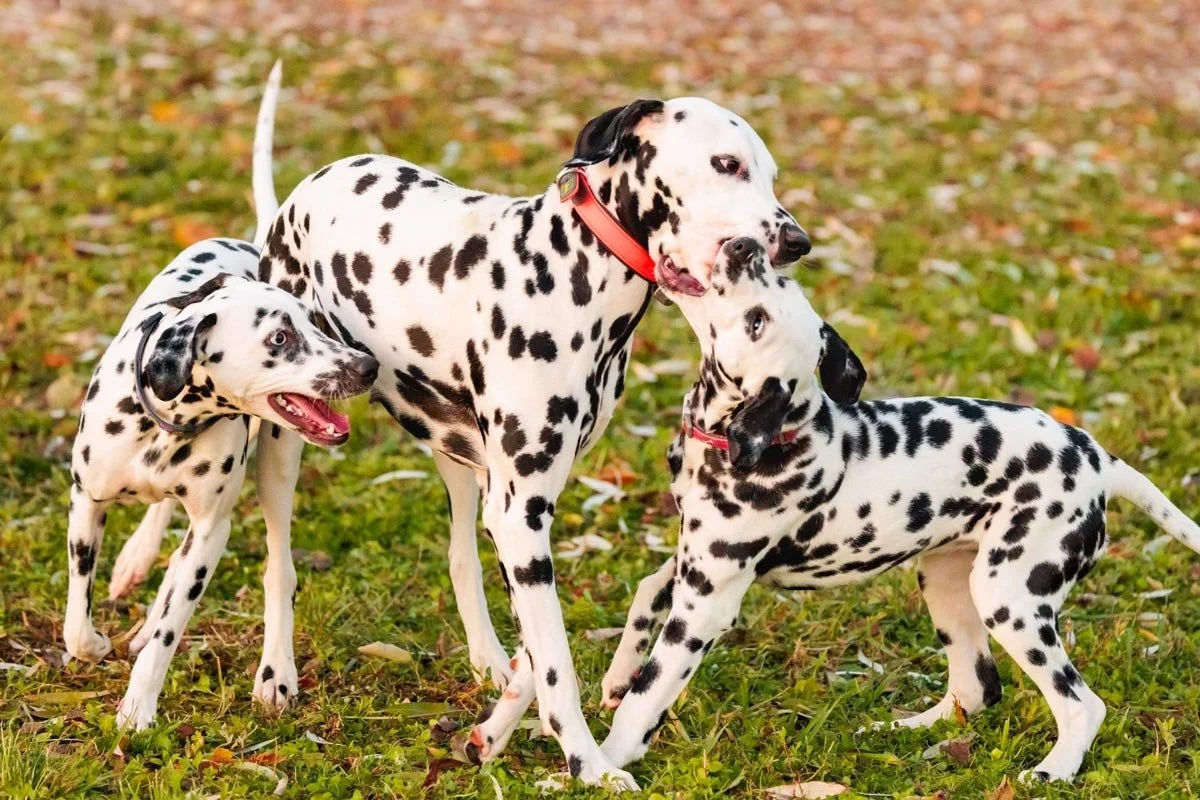
Dalmatians are true socialites. Known for their friendly and outgoing nature, they are happy to greet even complete strangers. Highly people-oriented, they form strong bonds with their families and thrive on human companionship. Most Dalmatians are affectionate, emotional dogs that enjoy close physical contact and spending time with their owners.
They love being touched and snuggled up next to their humans. It’s very common for Dalmatians to want to sleep next to, or even on top of their owners. Personal space is an unfamiliar concept - dalmatians are well known as being “velcro dogs”. They also love burrowing and will appreciate being covered up in a warm blanket, especially in the winter.
Intelligent and eager to adopt new skills, Dalmatians are quick learners, especially when motivated by food, toys, or play. Their enthusiasm and sense of fun are legendary, and many retain their playful spirit well into adulthood
Dalmatians respond best to positive, consistent training methods built on trust, communication and mutual respect. They are intelligent, sensitive dogs that form very strong bonds with their people, which means the way they are trained has a lasting impact on their confidence and willingness to cooperate.
Harsh corrections, intimidation, or punishment-based techniques should be completely avoided. These approaches can damage the trust that is essential to a strong relationship with a Dalmatian. They are particularly sensitive to negative interactions; being yelled at or treated harshly can cause them to withdraw rather than learn from the experience.
The goal of training is not to punish a Dalmatian for making a mistake, but to guide them toward the behavior you want to see. Instead of focusing on what they did wrong, show them what the correct choice is and reward them when they get it right.
Set them up for success and you’ll see them flourish!
Positive reinforcement through praise, play, treats, or simply your attention helps them understand what is expected and makes training something they genuinely enjoy.
A Dalmatian that trusts its owner will often go above and beyond to please them. The strongest partnership comes not from control, but from cooperation: clear boundaries, consistent guidance and plenty of encouragement.
When properly socialized from an early age, Dalmatians are great with children, other dogs and even cats. Their friendly disposition and adaptability make them excellent family companions.
While some Dalmatians can have a higher prey drive, they can also be trained to ignore the temptation to chase after squirrels, cats, or birds. If you notice your Dalmatian has a stronger hound streak, focus on building a reliable recall, teaching impulse control, and rewarding calm behavior around distractions. The goal is not to eliminate their natural instincts, but to teach them when it is appropriate to engage with the environment and when it is time to listen to you.
How Much Exercise Does a Dalmatian Really Need?
Originally developed for endurance and activity, Dalmatians thrive when they receive regular physical exercise and mental stimulation. But how much activity does a Dalmatian actually need? The answer may be less demanding than many people assume.
With our Pika, we usually aim for one “big” activity each day, combined with a shorter 30-minute on-leash walk in the evening. The main activity is typically around an hour long and can take many different forms.
It might be a bicycle ride where she can run alongside us, explore, and interact freely; a swim in the river or sea; a play date with her dog friends; a game of fetch combined with a few minutes of obedience training; or simply joining us for everyday activities such as going to a restaurant, visiting family, or exploring a new place. As long as she is included, she is happy.
Throughout the week, we regularly change both locations and activities. Dalmatians enjoy variety, and introducing them to new environments provides valuable mental stimulation and contributes to their overall wellbeing.
Despite their reputation as high-energy dogs, Dalmatians do not need to run for hours every day. In fact, repetitive high-impact exercise should be avoided while they are still growing, and running at full speed should be limited until they are physically mature. For young Dalmatians, a controlled trot and age-appropriate activities are much better choices.
Now that she’s fully grown, we let her run at full speed in very limited and controlled situations. We always choose safe, level grass surfaces to reduce unnecessary strain on her joints and muscles. Once again, the bicycle has proven to be an incredibly useful tool, as she naturally matches our pace rather than pushing herself beyond her limits. We turn these moments into short sprint races, full of excitement and play - and yes, we always let her win.
The key is not endless exercise, but providing a balanced combination of movement, mental challenges, social interaction, and time spent together. A fulfilled Dalmatian is usually a happy Dalmatian - and for this breed, being part of your life is often the most important activity of all.
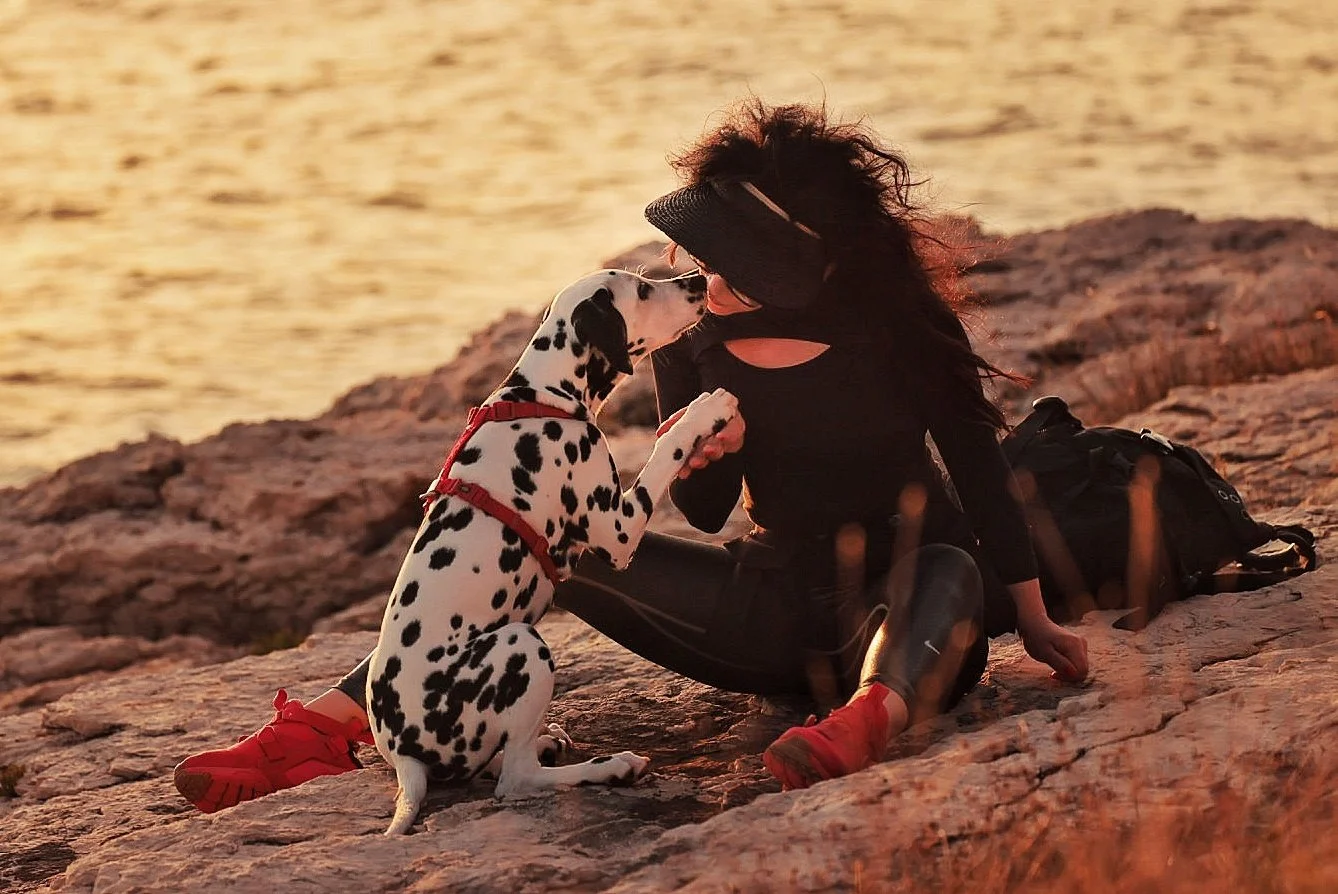
A picture says a thousand words, video - a million. Here’s some of the activities Pika enjoys! Double tap to play full screen!
How much activity do they need?
This is just a rough idea of what you can expect from an adult Dalmatian throughout the day. They sleep A LOT. Our Pika is usually lights-out by 10-11 pm and will sleep for about 12 hours, only asking for a potty break early morning. After her mid-day activity time and her meal she will sleep until 7 pm, when she’ll usually start asking for her evening walk. All in all, she sleeps about 15 hours a day.
She gets about 1-2 hours of outdoor activity a day. During the day she will also receive up to 1-2 hours of social interactions - cuddling with us in front of TV, greeting guests or delivery guys, short training or play sessions or simply being around us as we go through our daily routine. As long as she gets an occasional kiss or cuddle, she’s as happy as a dog can be.
We underline this again: dalmatians do not need to run for hours. 45 minutes of meaningful activity combined with mental stimulation or interaction with their humans is more effective than several hours of repetitive exercise. 20 minutes of sniffing out the doggy social networks outside or playtime with their friends will tire them out more than an hour of running.
Dalmatian daily rythm
Raise your paw if you have questions!

-
Yes! Dalmatians are medium sized dogs that easily adapt to living in apartments. We know many dalmatians owners who are apartment dwellers.
Keep in mind that they do need their outdoor daily activity time - a walk, a run, a playdate or a training session all help satisfy their needs.
Once they burn off some of their energy, they will happily settle at home.
Convenience of having a house with a backyard for occasional potty breaks is undeniable, but that’s goes for any other breed.
-
Yes - but with a few caveats.
If you're considering a Dalmatian as your very first dog, it’s not just the puppy who will be learning the basics - you will too. Being a dog owner means learning how to properly raise, train, and socialize your dog.
We strongly recommend enrolling in a puppy training class or dog school. It’s a great way to learn how dogs think and react, how they develop habits, how to set clear boundaries, and how to train them effectively.
These skills will be invaluable for years to come and will help both you and your dog enjoy a happy, fulfilling life together. In fact, we recommend puppy classes even for experienced owners, as they’re also an excellent opportunity to begin socializing your puppy from an early age.
The bottom line is that the time and energy you invest during your puppy’s early development will pay dividends in the long run. We want our dogs to go to dedicated, loving, and responsible owners who will enjoy everything this incredible breed has to offer for many years to come.
That said, we also want to be realistic about what it means to own a dog - any dog. You need to be prepared to commit the time, effort, and consistency required to make a dog part of your daily life.
If you're unsure whether a Dalmatian is the right fit for you, feel free to send us a message. We'd be happy to talk through the details and help you decide whether this breed is a good match for your lifestyle.
-
Yes, they can!
Our Pika is totally fine staying at home alone, for 6-7 hours. We work from home, so we don’t really have a need to leave her alone for longer, but we still got her used to the fact that occasionally she will be alone.
What’s important is to ease your puppy over time into staying alone. We started early, simply by leaving the house for a moment and then returning and rewarding her, extending the time away little by little. This helps preventing separation anxiety, which is something many puppies struggle with.
Most dogs aren’t really afraid of being left alone. They’re afraid you won’t come back. Your goal is to teach them over time that not only are you coming be back - it’s going to be awesome when you do!
When we started this part of training, a huge help was having a home camera that allowed us to see how she reacts to being alone. When we’d leave, we’d also limit the access to just the hallway.
This also helped us eliminate any temptations for destructive behavior. We have gone through the puppy phase with zero damage to our home - no chewed up shoes, no furniture damaged, no potty accidents and no major issues to mention.
Nowdays when we leave, our Pika will settle in her doggy bed and sleep, even though she has full house access.
Another important consideration is to take care of your dogs needs before leaving the home. A nice walk, a good meal and some snuggle time before leaving will massively help your dog accept that you’ll be gone for a while.
-
Dalmatians are medium sized dogs but, their adult size can vary depending on multitude of factors - mainly genetics, but also food, especially at early age.
Males are usually bigger and beefier than females, which tend to have a slimmer and more feminine profile. Weight wise, males average around 30-35kg, while females are 23-28kg.
This said, we have seen both male and female dalmatians that are significantly both under and over these ranges.
-
If there is one thing universal for all Dalmatians, it’s that kids adore them.
They are a staple of children’s toys, movies and cartoons and you will often hear excited “Marshall” or “Pongo” or simply “Look mom, a Dalmatian”.
Dalmatians have a cheerful and happy nature and enjoy attention, so it’s a match made in heaven. But, you do need to make sure early interactions go well.
This is why we recommend exposing your puppy to children in a controlled environment, making sure both your dog and the kids have a great time. Early exposure to well behaved children will set your puppy up for a lifetime of positive interactions.
We’ve done this by allowing controlled interactions with children during walks, taking Pika along to family gatherings and eventually even to children’s birthdays. Today, kids birthday parties are one of her favorite activities and we are always expected to bring her along - to everyone’s delight.
Pika has also been incredibly gentle even when interacting with babies, adapting her behavior and play style and showing a great understanding that a baby is not the same thing as a child. We’ve watched her patiently bring the ball and gently place it into a baby’s hand, we’ve seen her lay down and let babies crawl all over her.
All of this said, Dalmatians are bigger than children, so we recommend always paying attention to avoid having kids knocked down during playtime.
-
We want to say no, since our Pika is an incredibly quiet dog, but honestly - it’s a lottery.
Generally, Dalmatians are not known to be very vocal dogs, and you can expect a reasonable amount of usual dog sounds. They will alert you if someone’s at the door, if they notice an unusual sound or activity around the home, or they may let off a happy bark when you come back.
Pika is almost completely silent. She never barks at people, dogs, cats, birds, cars etc. We get a woof or two when someone rings the doorbell. She does sometimes “talk”, usually when she meets someone familiar and she’ll make a deep “whooooo” sound.
This said, we really can’t make any guarantees since you as an owner will also play a part in this. Proper socialization and training can make a big difference in how much they bark. Insufficient exercise or mental stimulation can lead to nuisance barking. If you satisfy their daily needs, you shouldn’t expect issues with barking.
-
Throughout their history, Dalmatians led a highly active, travel-oriented lifestyle. They not only ran alongside horse-drawn carriages but often rode on them as well, so it's no surprise that they generally take to car rides with ease.
Still, before taking them on longer journeys, it's best to introduce car rides gradually. Short, positive trips over an extended period will help your Dalmatian become comfortable with the unfamiliar sights, sounds, and sensations of travelling by car.
Pika will get herself comfortable and sleep for hours in a car. No barking, no whining, no moving about, no motion sickness. She’s a great car-travel dog!
While people rarely travel by horse these days, Dalmatians still have a strong instinct to trot alongside their companions. They'll be perfectly happy to accompany their owner on a bicycle, making it a great way to satisfy their natural desire to keep pace.
Keep in mind that puppies and young dogs should not be taken on long runs until they are at least one year old. This helps prevent unnecessary strain on their developing bones and joints while they are still growing.
-
Yes! One of the unique breed characteristics is smiling!
A happy and excited Dalmatian will sometimes pull back their lips and expose their teeth in a huge grin, as a part of their greeting ritual or a sign of excitement. This is known as a submissive grin, where a dog will pull back its lips and show teeth as a friendly, non-threatening gesture.
Dalmatian smile will be accompanied by a wagging tail, wiggly body, playful demeanor and relaxed ears. Some Dalmatians do it all the time, others save smiles only for their closest humans.
If you see it happen, enjoy the show!
-
Many owners report that their Dalmatians seem unusually interested in meeting other Dalmatians.
We have the same experience!
While it’s impossible to prove this definitively, it does seem that they are able to visually recognize other spotted dogs and favor them more than others.
Also, owners usually get excited when they see other Dalmatians and dogs are remarkably good at picking up on human reactions, so this could be playing a role as well.
-
Puppies will be raised in our home, not in a kennel. They will be placed in a custom built whelping box and monitored 24/7. We work from home and will be fully dedicated to them for the first 10 weeks.
Since the puppies will be raised in our home, we will start socialization early, exposing them to the usual house sounds, human voices and touches, TV noises, music and house appliance noises, different surfaces, outdoors (in our controlled fenced off back yard) etc. As they grow, we will also start getting them used to car rides and introducing them to various other experiences.
We live in an urban setting, so they will naturally be exposed to city noises such as sirens, cars, garbage trucks and so on.
Mother will be with them at all times and you will be able to meet her.
-
We are not a puppy mill. We have just one female and she gets all of our attention. She is healthy and in top physical shape.
She has a full hearing +/+ BAER test certificate, HD-A hip rating issued by Veterinary faculty in Zagreb (highest rating), a full DNA panel done with no hereditary diseases and a breeding permit issues by Croatian kennel club.
She comes from a renowned Croatian kennel, with national, international and even world champions in her family tree. Selected stud companion comes from equally impressive Croatian line, with confirmed compatibility and genetic diversity between the two.
We have passed all required breeder education courses, we are registered as breeders in both HKS and FCI and our female is registered in Croatian national pet registry database Lysacan.
After mating, she will be under regular veterinary supervision throughout the pregnancy. She’s been on ultra high quality dog food throughout her life and her diet will be adjusted according to professional guidance.
Puppies will be regularly checked by a vet and a breeding manager from our kennel club. They will be micro chipped, dewormed and fully vaccinated according to vaccination schedule.
All puppies will have their BAER hearing test done and the certificates will be provided along with the full FCI-recognized HKS pedigree documentation.
New owners will receive a written purchase contract which they will use to transfer the ownership of the puppy to their name.
-
In case you missed it - we are obsessed with Dalmatians. We want to know everything about the progress of the puppies, see their photos and videos, celebrate their milestones and provide all tips, tricks and advice to any prospect owner.
We fully understand that getting a puppy is a big deal and that fresh owners will inevitably have questions. Our goal is to provide you with long-term support and help out in any way we can. You will get our contacts and we will be available for any questions you may have.
We will also be happy to meet up in person down the line!
-
Our Pika has about 500 of them! And new ones keep showing up…
Dalmatian puppies are born completely white, the spots appear only a few weeks after birth.
Dalmatians can have black or brown (liver) colored spots. Yellow spots or multi-colored spots are considered undesirable and are against the breed standard.
Spots are not just on the coat - the skin beneath the coat follows the same spotting pattern. They also have spots in the roof of their mouth and sometimes they’ll have one or more black nails with the others being transparent.
High contrast of white base color and black or brown spots is a desirable feature. It’s also appreciated when the spots are clearly defined and aesthetically distributed all over their body.
Some dalmatians have more spots, while others have less. Some have more spots on their face, others have predominantly white faces. Sometimes spots form heart shapes or Mickey Mouse shapes. The main thing is that every dalmatian has a one of a kind unique spotting pattern!
Health and grooming
Dalmatians are generally healthy and resilient dogs, but like all breeds, they have a few specific health considerations that owners should be aware of.
One of the most distinctive aspects of the breed is its unique urinary system. Although virtually all Dalmatians carry the genetic predisposition associated with elevated uric acid levels, only a minority will go on to actually develop urate stones.
Providing constant access to fresh water, a balanced diet and regular veterinary care can help support a urinary tract health throughout their lives.
Their unique urinary tract means they can benefit from a low-purine diet. Do not feed them legumes (lentils, peas, chickpeas etc.), organ meats (kidneys, liver, heart etc.), blue fish (mackerel, sardines, herring etc.) and game meats such as venison or rabbit. Nothing is going to happen if they get a bit of any of these on rare occasions, but you should not be feeding them a diet that’s based on these ingredients as a major component.
Although they are not usually ranked among the breeds most strongly predisposed for it, some Dalmatians can be sensitive to seasonal allergies. These usually show up as slight bumps under their coat and are often related to pollen from grass, trees or weeds. Usually, these clear out on their own as the pollen season passes, causing minor or no discomfort.
While not all Dalmatians will experience allergies, owners should be aware of the signs and seek veterinary advice if symptoms become persistent or more serious.
Genetic research has not yet definitively identified the specific genes responsible for the higher incidence of congenital deafness in Dalmatians. Therefore, responsible breeders rely on the brainstem auditory evoked response (BAER) hearing test to evaluate every puppy and ensure there is no hearing impairment.
The BAER test measures the brain’s electrical response to sounds played into each puppy’s ear, allowing hearing ability to be assessed accurately on both sides. It is considered the gold standard for diagnosing congenital hearing loss and confirming that puppies have normal hearing.
In Croatia, a Dalmatian without a clear BAER test result cannot receive a breeding permit, making this test an essential part of responsible breeding practices, along with an appropriate hip dysplasia rating.
Regular health screenings and preventive veterinary care are essential for maintaining the long-term wellbeing of the dog. Occasional nail trimming, ear checks and dental hygiene all contribute to a happier and healthier dog.
Grooming
When it comes to grooming, Dalmatians are surprisingly low-maintenance. Their short, smooth coat does not require trimming or professional grooming, but it does shed throughout the year. The spots stay on the dog, but the hairs don’t! Owners affectionately call it “Dalmatian glitter” and it’s something we all learn to accept as part of the package.
It’s not all lost though! Regular brushing helps remove loose hair, keeps the coat looking its best and significantly reduces the amount of fur around the home.
We suggest using low profile silicone brushes to bring out the loose hair and then use dense combs (such as Furminator) to pick everything off. We do this a couple of times when we notice the shedding is more pronounced as a part of our walk and it rarely takes more than a minute. Occasional egg yolk or a bit of fish or olive oil in their food can also improve the quality of their coat.
Odor and bathing
Dalmatians are often regarded as one of the cleaner and less odor-prone dog breeds. Their relatively low skin oil production means they typically have no "doggy" smell. While no dog is completely odorless, Dalmatians are known for their cleanliness and are often appreciated by owners who prefer a dog with minimal natural odor.
Dalmatians require very little bathing. Their short coat and naturally low odor mean that frequent baths are usually unnecessary and may even be counterproductive, as excessive shampooing can strip the skin of its natural oils.
There’s just one exception - if they go swimming in sea-water, we recommend rinsing them with tap water afterwards and wiping them down with a towel, as salt can dry out their skin. It’s also best to thoroughly dry out their ears using a towel after any water-based activity.
Regular brushing and occasional baths when needed are typically all that is required to keep a Dalmatian's coat healthy, clean, and glossy.
We sometimes joke that their coat has self-cleaning properties. Pika has been covered head to toe in sand and dirt on countless occasions, but by the time we get home, most of it has simply fallen away. For anything that's a little more stubborn, a quick clean up using dog-appropriate wet wipes usually does the trick.
Nails
Dalmatians generally have strong, healthy nails that often wear down naturally through regular exercise. But they still do need to be trimmed occasionally, especially the declaws (front paw nails, placed higher up the leg).
Some Dalmatians will have a mix of transparent and black nails, which makes trimming the black ones more challenging as it’s impossible to see the blood vessels inside. If introduced from puppyhood, Dalmatians tolerate nail care quite well. We use an electric nail grinder and bribe our way through each nail with tasty rewards! Pay as you go!
Overall, dalmatians are generally low maintenance dogs. While you can take them to a professional groomer for a de-shedding session, it’s completely optional. Pika has never been to a groomer and she’s winning championships. We do a bit of usual maintenance with brushing, water, wet wipes and nail grinder and that’s it. Shampoo baths are few and far in between.
With proper nutrition, regular exercise, preventive healthcare, and minimal grooming, Dalmatians can enjoy long, active lives as beloved family companions.
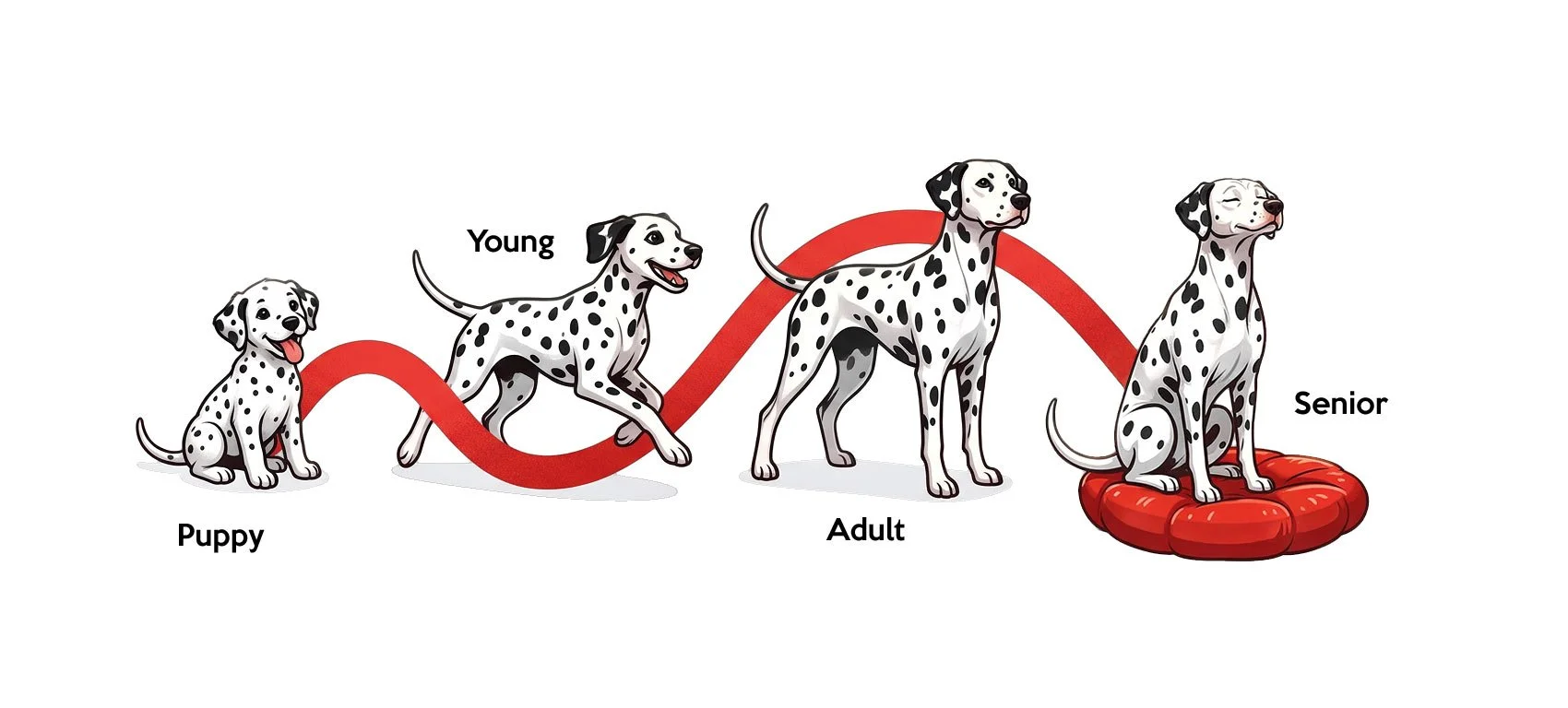
Life phases of Dalmatians
-
Puppies typically go to their new homes at around 2.5 months of age, making this an exciting time of discovery, learning, and adjustment.
This is a crucial period for shaping your puppy's future behavior and confidence. Start training and socialization immediately by gently introducing them to new people, environments, sounds, surfaces, and experiences in a positive and controlled way. Early exposure helps puppies grow into confident, well-adjusted adult dogs and reduces the likelihood of fear-related behaviors later in life.
Keep training sessions short, fun, and rewarding, focusing on basic skills, good manners, and building a strong bond with your puppy.
Consider enrolling in a puppy school, where your puppy can learn important social skills and gain positive experiences around other dogs while you receive guidance on training and development.
-
During this stage, your dog will experience rapid physical and behavioral development. They will continue to grow and usually reach their full height by around 1 year of age.
Your dog will also go through puberty and become sexually mature, typically beginning between 6 and 8 months of age.
As hormones start to influence their behavior, they may become more interested in dogs of the opposite sex, test boundaries, and show a greater desire for independence. Female dogs will usually have their first heat cycle between 8 and 14 months of age, though this can vary depending on individual development.
Some dogs may seem less focused or responsive than before, even if they previously followed commands reliably.
Dogs in puberty are very much like humans in puberty - they think they know everything and you’re just a boring parent holding them back.
This can be a challenging period for many owners, but it is a normal part of growing up. Consistency, patience, and positive reinforcement are key. It is especially important to continue obedience training and maintain clear rules and routines throughout this phase.
-
Your dog will become fully mature and you will notice them become more serious and settled in their behavior.
This is the period when all of your earlier training pays off! They will become more predictable, grounded and emotionally stable.
Many adult dogs have better impulse control, are less easily distracted and feel more confident in familiar situations.
While they still need regular exercise, mental stimulation, and continued reinforcement of good habits, this stage is often when the bond between dog and owner feels strongest, as your dog truly grows into their personality and becomes a reliable companion.
-
As your dog reaches their golden years, you will likely notice them gradually slowing down.
They may become less physically active, tire more quickly, and spend more time resting. As part of the natural aging process, muscle mass and strength can decrease, making some activities more challenging than they once were.
Their exercise routine may need to be adjusted to suit their changing needs. Regular activity remains important, but the duration, intensity, and type of exercise should be adapted to avoid unnecessary strain on aging bones, joints, and muscles. Gentle walks, low-impact activities, and mental enrichment can help keep senior dogs healthy and engaged.
In many ways, a senior dog is similar to a senior human. Their hearing and eyesight may gradually decline, and they may need a little extra assistance with everyday tasks such as climbing stairs, jumping into a car, or navigating unfamiliar environments. They may also benefit from softer bedding, more frequent health checks and a consistent daily routine.
With proper care, nutrition, exercise, and veterinary attention, many dogs continue to enjoy a happy and fulfilling quality of life well into their senior years. The average lifespan of a well-cared-for Dalmatian is around 12 to 15 years, although some individuals live even longer.

"Last supper" - a painting found in a monastery in Croatian village of Zaostrog created in 17th century

"Our Lady of the Angels", on island Veli Lošinj, Croatia, 1600.
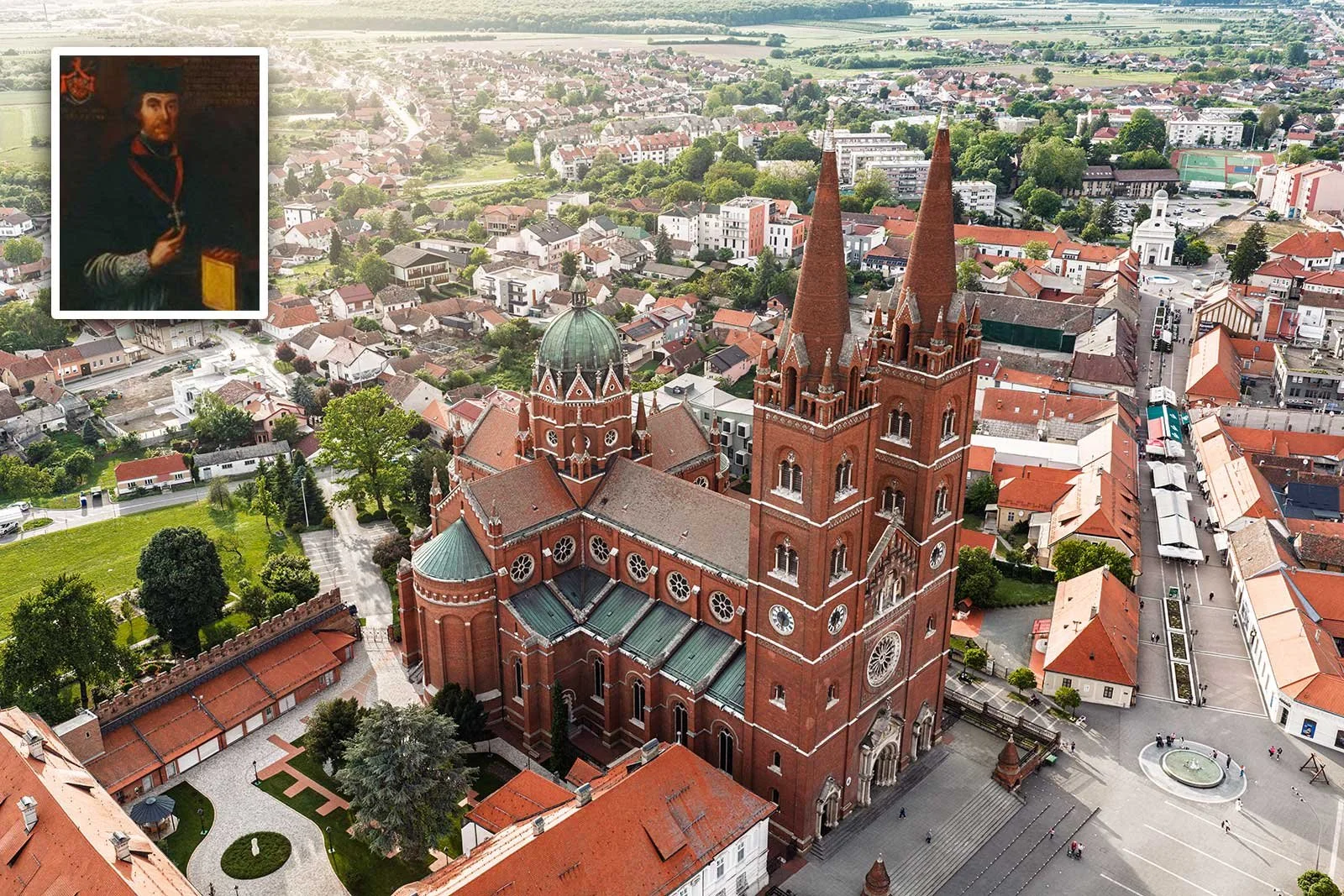
1719. bishop Petar Bakić in Đakovo, Croatia wrote the first breed description, calling the dog "Canis Dalmaticus" and noting it originates from Dalmatia.
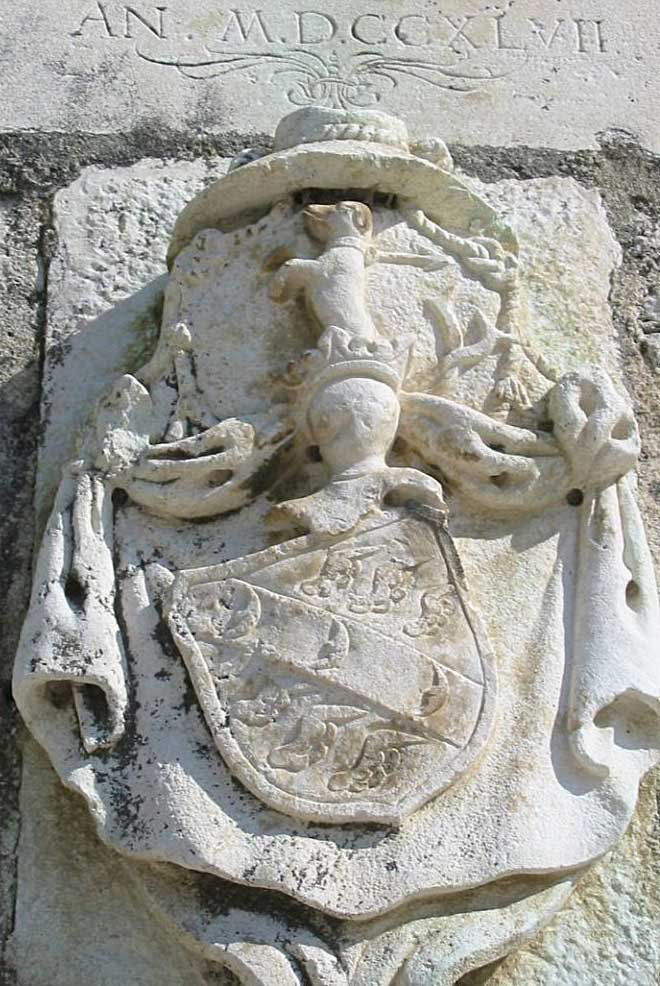
Bishop Petar Bakić's family crest, featuring a dog

"Portrait of Francesco di Cosimo II de' Medici with a Dalmatian," created in 1622., another early depiction of Dalmatian linking the breed to the Adriatic
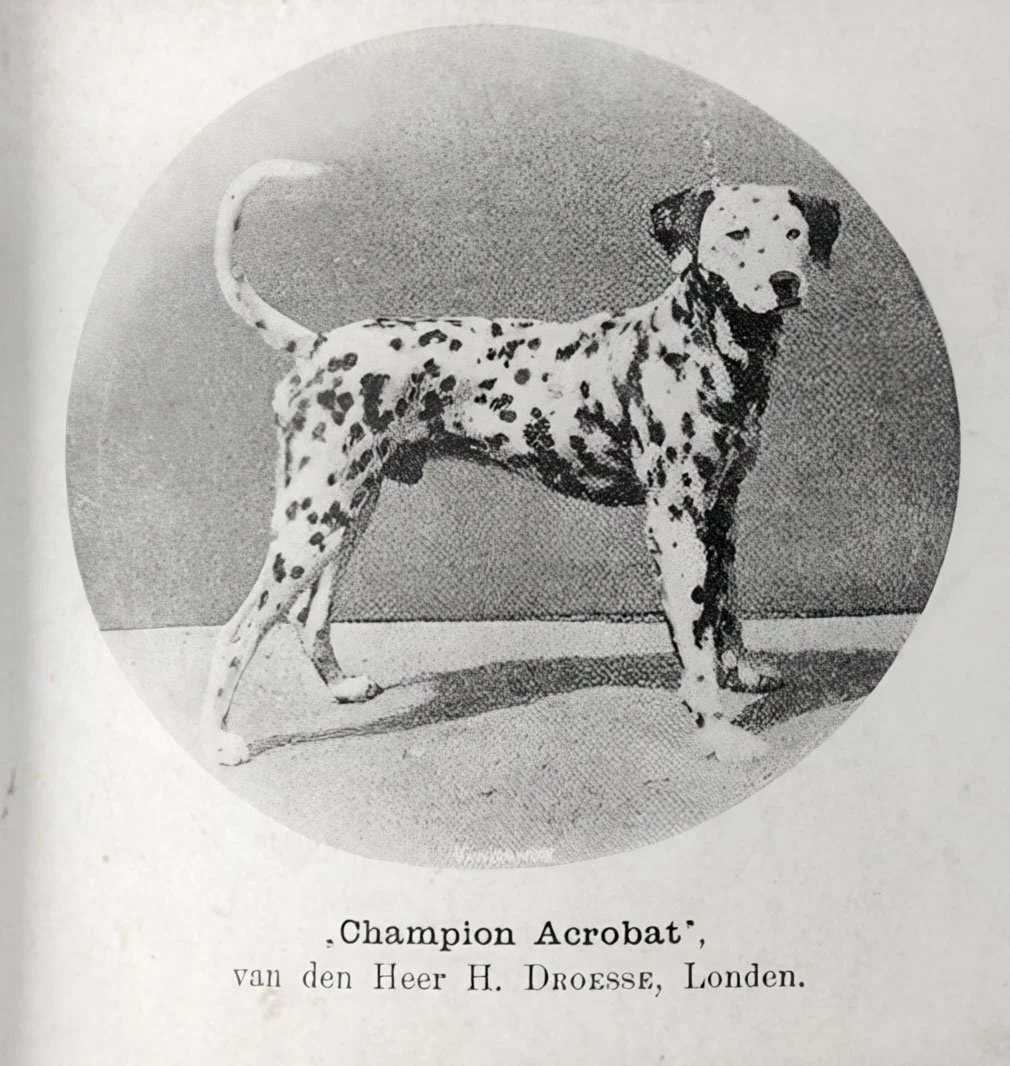
Just for fun: earliest photo of Pika's direct ancestor. This handsome boy was born in 1887. and was a Champion of UK over 130 years ago!
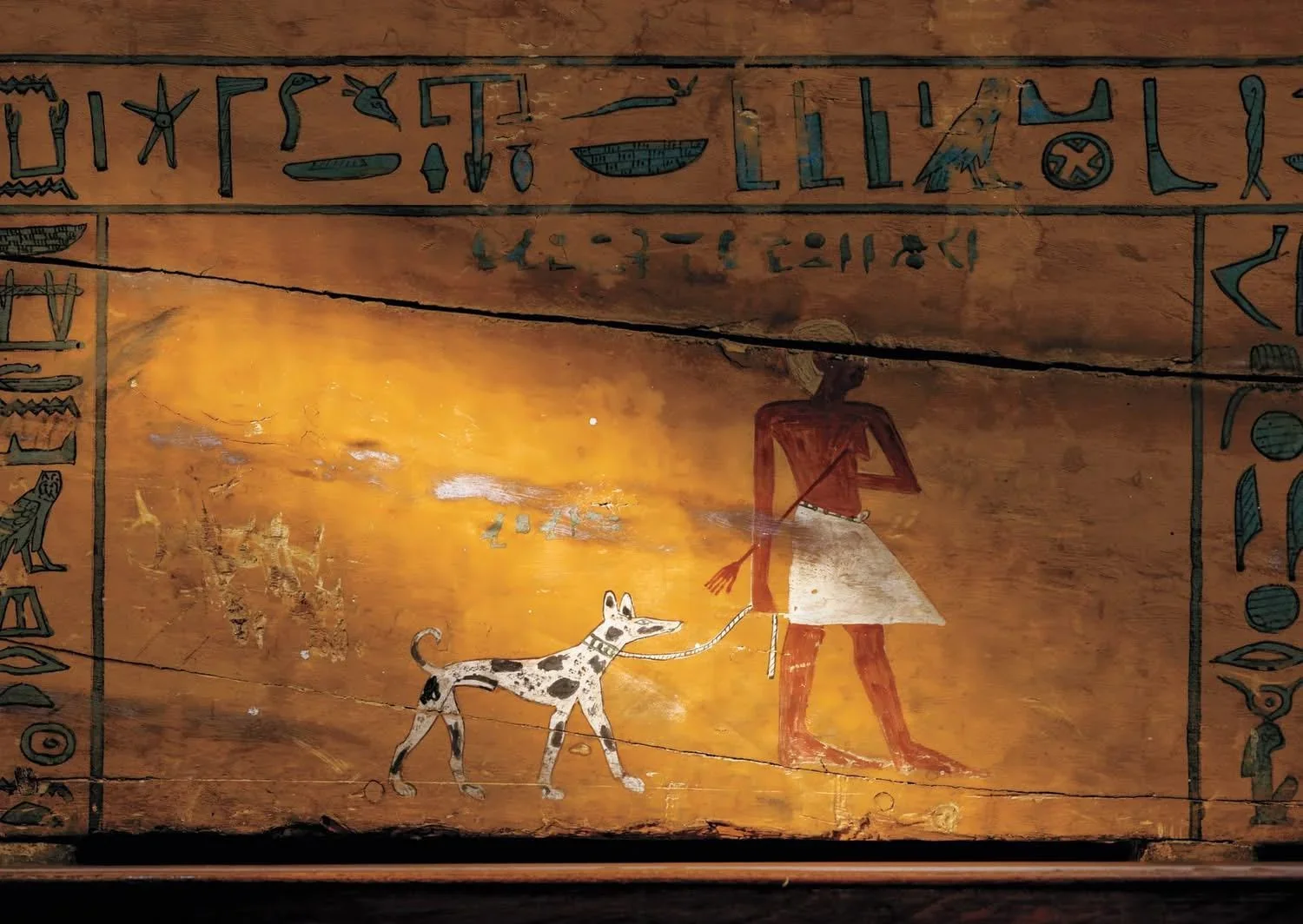
DNA doesn’t lie: this is not a Dalmatian!
History
Originating from the Croatian coastal region of Dalmatia, the Dalmatian was originally bred as a hunting dog. Its natural affinity with horses made it an ideal carriage companion, and throughout history it served as a coach dog, horse escort, guard dog, and even a war dog.
During the 18th and 19th centuries, Dalmatians spread throughout Europe and beyond. Their versatility, stamina, intelligence, and cheerful temperament allowed them to excel in a wide range of roles.
Much of the breed's early success can be attributed to its growing popularity among the English aristocracy during the 19th century. It was in England that the first official breed standard was established, along with some of the earliest Dalmatian stud books and dog shows. The influence of English breeders was immense, and many modern Dalmatian lineages can still be traced back to these foundational breeding programs.
The breed's distinctive spotted coat, impossible to overlook, and its renowned endurance made the Dalmatian a perfect companion for horse-drawn fire engines in the United States. However, its rise to worldwide fame came with Walt Disney's 101 Dalmatians, which introduced the breed to generations of dog lovers around the globe.
The Dalmatian was formally recognized by the FCI in 1955., and in 2010. the FCI officially established Croatia as the breed's country of origin.
Early Historical Evidence
The earliest widely accepted artistic depiction of a recognizable Dalmatian is an altar painting dating from the early 17th century, located in the Church of Our Lady of the Angels on the Croatian island of Veli Lošinj. Breed historians frequently cite this work as the oldest known image of a Dalmatian.
Another early depiction is a fresco in Zaostrog, also in Croatia, which is often mentioned alongside the Veli Lošinj painting as one of the breed's earliest artistic representations.
The earliest known written description of the breed is likewise found in Croatia, preserved in the archives of the Diocese of Đakovo. In 1719, Bishop Petar Bakić described a white, short-haired dog marked with round black spots and noted for its speed, hunting ability, and courage in battle.
In his work De vita populi et eius Districtus anno domini, Bakić records that these dogs were used by the nobility for hunting and personal protection. He refers to the breed as Canis Dalmaticus, states that it originated from Dalmatia, and notes that approximately 420 such dogs were being bred within the diocese. Remarkably, Bakić also writes that the same dog had been described by his predecessor Peter nearly 400 years earlier, in 1374.
For many historians, Bakić's testimony remains among the most valuable pieces of evidence regarding the Dalmatian's historical origins. Unlike artistic depictions, which may be open to interpretation, Bakić explicitly names the breed Canis Dalmaticus and directly associates it with Dalmatia.
Ancient theories and modern genetics
Claims have occasionally been made that Dalmatian-like dogs appear in ancient Egyptian, Greek, and other early artworks. While such depictions certainly demonstrate the existence of spotted dogs in antiquity, researchers do not regard them as evidence of the modern Dalmatian breed having any connection to those countries.
Recent advances in canine genetics have challenged many long-held assumptions regarding Dalmatian ancestry. Modern DNA studies indicate that the Dalmatian is a distinct modern breed with a long history of selective breeding. Genetic evidence places it closer to European hunting and sporting breeds rather than to any surviving ancient lineage, providing no support for theories that Dalmatians are descendants of dogs from ancient Egypt or other early civilizations.
Furthermore, analyses of runs of homozygosity (genetic markers used to estimate how long breed-defining traits have been preserved within a population) suggest that the modern Dalmatian began taking shape approximately 500 years ago.
Separating History from Myth
Why, then, do theories linking Dalmatians to Egypt, Greece, Asia, or even the Roma people continue to persist?
The answer lies largely in historical speculation, folklore, and outdated breed histories written before the advent of modern genetic research. For centuries, the origins of many dog breeds were reconstructed through artwork, anecdotal accounts, and local traditions. While these sources remain valuable pieces of cultural history, they do not always reflect biological reality.
Today, genetic evidence paints a more nuanced picture. Although some aspects of the Dalmatian's early development remain the subject of ongoing research, the strongest historical and genetic evidence points toward a long-standing association with Croatia.
While the precise details of the Dalmatian's earliest development may never be known with complete certainty, the combined weight of historical records, artistic evidence, and modern genetic research paints a far clearer picture than ever before.
Together, these sources point to a breed with deep roots in the western Balkans Adriatic region - particularly in present-day Croatia, but also within the broader historical and cultural landscape that includes parts of modern-day Serbia and Slovenia. They also highlight the important role that later European breeding programs, especially those established in England, played in shaping the Dalmatian into the breed we recognize today.
Likewise, there is no competing region with a better-documented claim. Suggestions that the breed originated in Italy, India, or elsewhere have generally rested on weaker evidence or speculation and Dalmatia remains the best-supported geographical association.
How important is all of this? Research into breed origins is more than an academic exercise. Historical and genetic studies can provide valuable insights into how breeds developed, how they are related to one another, and how inherited traits - including those relevant to health - have been shaped over time.
A better understanding of the Dalmatian's past contributes not only to historical knowledge but also to ongoing efforts to support the breed's long-term health and welfare.
While these academic discussions continue and are occasionally fiercely debated, Dalmatians remain cherished family companions and one of the most recognizable and beloved dog breeds in the world.